A record of The Power of Complicity
By: Herte of Hireotha
Edited by: Famous Person
He didn’t build an army
When does the observer become the accomplice?
When does silently witnessing become participation?
he built an ideology
Reader Advisory: This book contains scenes of intense violence against men, women, and children. Its contents and themes are intended for mature audiences (18+). Reader discretion is advised.
Step inside the mind of the man who turned an entire Continent into a bystander.
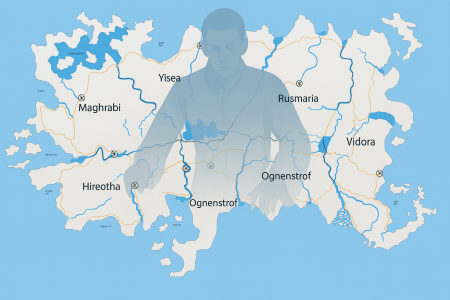
The Mushkinek Uprising Page Map
Introduction
The Mushkinek Uprising is a speculative fiction prequel set in the world of Thalevir, exploring rebellion, historical erasure, and moral consequence.
The Mushkinek Uprising Teaser

They say the Mushkinek Uprising began with a glance rather than a sword or a throne. It started with a boy watching a girl who would one day be queen. She was Ta’arah of Hireotha, born to light and lineage. Because he was a mere merchant’s son, he told no one what he felt that day; instead, he simply decided he would have her.
Mushkinek was neither a conqueror nor a king at first. He was just a boy who wanted a queen. Consequently, he built an uprising so quiet and so vast that by the time he took me, it was already too late. I eventually met Mushkinek as a tyrant who made my purpose explicit from the beginning: write what I do, or die.
I am Herte, a scholar of history held close enough to see the machinery of the Mushkinek Uprising turn. I witnessed the councils, bribes, and laws reshaped in careful increments. While I told myself I was only recording, proximity eventually sharpened my curiosity. This is not a story of gods or monsters. Rather, it is the account of what happens when the instinct to know survives longer than the instinct to resist. I continue to write because once you see how power is built, looking away is its own kind of lie.
Characters

Because an eyewitness and reluctant biographer recorded these events, the Mushkinek Uprising features a focused cast of main characters. The following figures are the central individuals who drive the story forward.
These people are deeply involved in the major conflicts, themes, and emotional arcs of the narrative. Consequently, most chapters will follow or reference them directly. Their personal choices often shape the world around them, proving that the Mushkinek Uprising was built on the back of individual ambition and sacrifice.
The Witness and The Architect
This section provides brief personal sketches for Herte, the witness, and Mushkinek, the primary architect of the Mushkinek Uprising. While one man built the machine of revolution, the other was forced to document its gears.
Understanding these two figures is essential because their relationship defines the entire narrative. Because Herte provides the perspective and Mushkinek provides the power, their intersection creates the friction that drives the Mushkinek Uprising forward. Consequently, these sketches offer a glimpse into the internal motivations behind the external conflict.
Herte [HAIR-TAY]
Herte was an only child, born to modest means in the city of Maadigan. His father, a soldier, died when the boy was still very young. Consequently, his mother took on work as a housekeeper and seamstress to support them both. Despite these hardships, Herte remained a curious and intelligent child. He eventually taught himself to read in the private library of one of his mother’s clients. When he was caught reading at the age of seven, the client, rather than scolding him, was impressed by the boy’s aptitude and became his benefactor.
This early exposure to rare books sparked a lifelong fascination with history. Herte eventually earned admission to the Royal University at Maadigan, where he transitioned from a student of classical history to a professor. Over the years, his studies revealed a troubling pattern: cycles of war followed by reconstruction, which inevitably led to the social unrest that fuels movements like the Mushkinek Uprising.
Determined to understand these cycles, Herte spent years combing the libraries of every kingdom. His seminal work, Unity or Slavery, was the product of fifteen years of research. However, on the night of his twentieth anniversary at the University, Herte vanished without warning. While some believe he drowned in the Mulcour River, others are not convinced. Fragments of scrolls suggest Herte survived to document the most devastating conflict of all: the Mushkinek Uprising. Because of his expertise, he became the reluctant biographer of a revolution he had spent his life trying to predict.
Mushkinek [MEW-SHKIH-NEK]
One of the most notorious villains in the history of Cendomvita adopted the name of Mushkinek. Born as an only child into a middle-class merchant family in Maadigan, he experienced tragedy early when his mother died of a chronic disease. This loss, however, was soon overshadowed by a dark fixation. At age ten, he developed a life-altering obsession with Princess Ta’arah of Hireotha. This obsession eventually fueled the fires of the Mushkinek Uprising.
His resentment focused primarily on Prince Noam, the Crown Prince, simply because Noam stood in the way of Ta’arah’s path to the throne. While his peers pursued normal lives, Mushkinek developed sadistic tendencies that escalated from animals to people. By his late teens, he had secured enough financial resources and underworld connections to begin a ruthless quest for power. Consequently, he faked his own death to sever ties with his past and expanded his influence across every kingdom.
During this period of preparation, he accumulated massive tracts of land in the Central Mountains. Because this range spans thousands of miles, it provided the perfect cover for his growing army. He built or rehabilitated hidden strongholds capable of housing thousands of soldiers in anticipation of the Mushkinek Uprising. About a year before the conflict began, he conscripted the famed scholar Herte to document his rise. Ultimately, it is only through Herte’s reluctant work that we understand the origins of the man who nearly unmade the world.
Agents of the Uprising
The Mushkinek Uprising involves a vast network of characters from across the entire continent of Cendomvita. Although these figures were not the primary architects of the conflict, they played noticeable roles in the final outcomes of the war. Because their influence was felt in every kingdom, understanding these agents is essential to understanding the sheer scale of the revolution.
Many of these characters are complex enough that they could have their own stories written in detail. Specifically, their lives before, during, and in some cases after the Mushkinek Uprising ends provide a rich tapestry of the era. Although their roles did not drive the main narrative, their individual choices often served as the friction or the fuel that allowed the uprising to spread so far.
In the bright halls of Queen Salisandra’s court in Yisea, Balthuho was a man who seemed always to be listening. He kept his ears tuned for whispers and his eyes sharp for advantage. While he carried himself with a polished charm, that exterior concealed an ever-turning mind. This was a man who weighed risk against reward with uncanny precision. Those who dealt with him rarely forgot the feeling that he was measuring them for their future use.
Ambitious yet cautious, Balthuho believed no side ever truly won without exacting a price. He intended to ensure that whatever the cost of the Mushkinek Uprising, it would not fall upon him. Because he was a master of survival, he often shifted his allegiances to match the changing political winds. Consequently, Balthuho became a key figure for anyone looking to navigate the dangerous currents of the era. Although he did not lead the revolution, his presence ensured that the Mushkinek Uprising had eyes and ears in the highest halls of power.
As the captain of a modest vessel, Fendrel’s reputation along the Hireothan coast has little to do with the size of his catch. What sets him apart is his restless ambition and the ease with which he steers through both tempests and tavern talk. While he appears to be a simple fisherman, he is actually a man who trades in favors, whispered secrets, and timely opportunities.
To the casual eye, his quiet confidence might pass for humility. However, that calm exterior conceals a sharp instinct for leverage. Fendrel listens with patience and speaks with precision. He knows better than most that fortunes often wash ashore where one least expects them. Because of his strategic position on the water, he became an invaluable asset at the beginning of the Mushkinek Uprising.
Although he never sought a life of open rebellion, Fendrel realized that the Mushkinek Uprising offered a unique chance to elevate his status. Consequently, he used his vessel to transport more than just cargo, ensuring that information flowed as freely as the tides. By the time the conflict reached the coast, Fendrel had already positioned himself to profit from the changing world.
Among the early circle surrounding the architect of the revolution, Halven was less a companion than a strategist. He was sharp-eyed, calculating, and always alert to the balance of advantage. While others focused on physical force, Halven focused on the law. His rise from student to legal authority was swift because his education was sharpened into a weapon by ambition and opportunity.
In the courtroom, Halven’s measured words carry weight. Behind closed doors, however, his silences often carry even more. Those who deal with him remark on his polish and his composure. There is also a disquieting sense that he is not swayed by notions of right or wrong, but only by what can be achieved. If others played the part of the hammer, Halven was the hand that guided its fall.
Because of his unique skills, he became indispensable during the Mushkinek Uprising. He ensured that the revolution was built on a foundation of rewritten laws and strategic silences. Although he preferred the shadows of the archives to the heat of the battlefield, his influence on the Mushkinek Uprising was absolute. Consequently, he remains one of the most dangerous figures in the history of the conflict.
In the taverns and markets of Maadigan, Kelvor drifts like a performance. This figure wears velvet draped over quick steps while a cup of wine remains perpetually in hand. Although laughter spills out too loud to be natural, every eye follows the spectacle. Coins are spent freely and gestures are extravagant. Yet, for all this attention, few claim to truly know the person behind the persona because that flamboyance is not carelessness but camouflage.
Behind that mask lies a mind of calculating precision and sweeping influence. As the undisputed leader of the Thieves’ Guild in Maadigan, Kelvor’s command over the city’s criminal networks is quiet and absolute. Whispers of a true face linger in back alleys, though those who claim to have seen it rarely speak twice. Furthermore, rumors of Kelvor’s voice are dangerous because to hear it is often to hear nothing else again.
Kelvor thrives in unrest and shapes it to personal advantage with finesse. Consequently, what others call chaos, Kelvor calls opportunity. During the Mushkinek Uprising, these skills became vital for the revolution’s intelligence network. While kings scrambled for soldiers, Kelvor offered something rarer: certainty. Because this influence was as steady as it was unseen, the Mushkinek Uprising was able to move through the city’s shadows without detection.
As an attaché to Yisea’s embassy, Kelyn moves through courts and markets with the poise of a seasoned diplomat. She possesses the subtle cunning of one who knows how to weaponize whispers. She is always in the company of powerful figures, but she is never beneath them. Kelyn’s presence commands attention because every carefully chosen word can shift the course of a conversation or even a nation.
To most observers, Kelyn is the embodiment of loyalty and elegance. She appears as a polished envoy in a storm of regional politics. To others, however, Kelyn is something far more formidable. She serves as a surrogate for the architect of the Mushkinek Uprising, spreading seeds of doubt and division with the precision of a master strategist. Beneath the diplomacy and charm lies a mind that is constantly measuring the deeper currents of influence.
Because she is ambitious and disarmingly self-controlled, Kelyn rarely loses. When she does experience a setback, she ensures that others bear the weight of the consequences more than she does. This ruthless efficiency made her a vital asset during the Mushkinek Uprising. Consequently, she left a trail of political shifts that few fully comprehended until it was too late to resist the revolution.
During the turbulent years of the Mushkinek Uprising, King Gryffid governed Vidora with a commitment to prosperity and public welfare. He was frugal, but he was also highly effective. He directed resources toward public works and social programs, which earned him the respect of his people. Unlike his father, who prized appearances, Gryffid believed that strong systems were the foundation of a stable society. Consequently, he governed with a level of discipline and foresight that was rare among his peers.
Less known to the wider world was the fact that Gryffid possessed a deep love of learning. He studied many of the same texts as scholars like Herte and Mushkinek because he wanted to cultivate insights that would strengthen his rule. This intellect, combined with Vidora’s economic and military might, made him a figure of considerable influence among the monarchs of the Seven Kingdoms.
However, even the most respected rulers are not immune to suspicion. Rumors occasionally cast shadows on the court, suggesting that Vidora might have played a secret part in the conflict. Through it all, Gryffid remained steadfast in his commitment to order. He was guided by the belief that prudent leadership could outlast the chaos of the Mushkinek Uprising. Because he prioritized stability over short-term gain, his legacy remains a subject of intense debate among historians of the era.
As Chief of the Cendomvitian Pirate Guild, Lazrik rose from a low-ranking sailor to the master of a floating empire. He originally served aboard a Vidoran warship but vanished from the royal muster rolls after enduring harsh discipline. While many expected him to disappear forever, he eventually reappeared beneath a black sail as a figure of cunning and command.
Lazrik thrived among the pirates because he served under a captain who prized initiative over obedience. During this time, he honed a sharp tongue and an uncanny ability to bend rules without breaking ships. He learned to win loyalty through laughter or fear, wielding each with precision. Consequently, he outlived his rivals and transformed a single ship into a formidable fleet.
To outsiders, Lazrik is a name embedded in sea shanties and the warnings of merchants. To his guild, however, he is a leader who remembers the struggles of his crew. Rumors occasionally swirl about his connection to the Mushkinek Uprising. While some speak of family ties to the architect of the conflict, others whisper of secrets yet unspoken. Regardless of his true motivations, Lazrik’s presence at sea during the Mushkinek Uprising was a force that no kingdom could easily ignore.
As an assassin for hire, Marchant is a figure whose reputation travels faster than footsteps and sharper than blades. He is feared across borders and spoken of only in hushed tones. Interestingly, the name is rarely mispronounced twice because those who confuse it with “Marchant” seldom live to explain.
Marchant does not operate out of vengeance, ideology, or cruelty. Instead, he maintains a strict sense of professionalism. Each contract is calculated with meticulous attention to logistics. For example, accessibility lowers the fee while high security raises it. Rank and innocence do not factor into his work. Efficiency defines him, and most believe that once Marchant takes a contract, failure is no longer an option.
During the Mushkinek Uprising, stories of his extraordinary patience and unwavering precision became legendary. Rumors abound of years long waits and near impossible feats. However, the truth matters little because the mere mention of his name is enough to silence a room. Because he was active throughout the Mushkinek Uprising, his shadow fell across many of the war’s most pivotal moments. Marchant speaks rarely, and when he does, it is best to listen. When he remains silent, it is even wiser to do the same.
As the eldest child of King Alaric and sibling to Princess Ta’arah, Prince Noam was remembered as a figure of great promise. He was diplomatic in bearing, skilled in combat, and respected for his fairness. Because contemporary accounts portray him as an heir who combined courage with tact, he was a young leader whose potential inspired both admiration and expectation.
Unfortunately, Noam’s life was cut short under circumstances that remain shrouded in mystery. His untimely death reshaped the Hireothan line of succession. It also left lingering questions that historians continue to debate today. While whispers of intrigue surround the events, few can separate rumor from fact. Consequently, his death became a pivotal moment that cleared the path for the Mushkinek Uprising.
To many scholars, Noam is remembered as a symbol of lost potential. Others see his absence as the specific turning point that altered the course of history. Whatever the interpretation, his legacy remains a quiet but powerful force in Hireothan politics. Because his removal from the line of succession was so convenient for certain parties, his story is inseparable from the broader events of the Mushkinek Uprising.
Born into the privilege of Hireotha’s royal court, Ta’arah spent her early years in the long shadow of her older brother, Crown Prince Noam. In her youth, she was often known for vanity and self-interest. However, these traits would soon be tested by events far beyond her control. The disappearance of her brother, followed by the collapse of King Alaric’s health, thrust her into a position of responsibility that no one had anticipated.
At just twenty years old, Ta’arah had to navigate a kingdom in turmoil while learning the art of leadership under pressure. Because her decisions during this period were sometimes questioned and often admired, they revealed a surprising capacity for resilience. These leadership qualities became essential as the shadows of the Mushkinek Uprising began to spread across the borders of Hireotha.
Her eventual engagement to a duke of Ognenstrof, arranged after the Mushkinek Uprising, served as both a political gesture and a symbol of regional stability. Consequently, history remembers her as Queen Ta’arah, a ruler transformed by harsh circumstance. While she was imperfect, she remained formidable. Her reign ultimately reflects the weight of inherited responsibility and the shaping hand of necessity.
As the Queen of Yisea during the Mushkinek Uprising, Salisandra rules with a mind that is as sharp as it is calculating. She is more feared than beloved because she navigates the court and council with measured words. Each statement is chosen for its subtle power and secondary purpose. While other monarchs might be guided by sentiment, ambition almost always drives her decisions.
To Salisandra, the notion of equitable rule among the Seven Kingdoms is a mere illusion. She believes that power belongs to those willing to seize it. Consequently, she wields her own influence with precision and exploits opportunity wherever it appears. Loyalty is always contingent and transactional for her. Whether dealing with allies, councilors, or family, she offers support only when the balance of power favors her own throne.
Alliances with Salisandra are temporary bargains struck at her discretion. These agreements always come at a price. Furthermore, to underestimate her is to hand her the one thing she prizes above all else: leverage. Because she is calculating, patient, and unflinching, she became one of the most formidable players during the Mushkinek Uprising. Her presence casts long shadows, and her influence is felt far beyond the borders of Yisea.
More merchant than pirate, Quen handles trade deals, bribes, and inventory with a unique finesse. He oversees the resources for Lazrik’s fleet at their base in the Maghrabi Sound with the precision of a tyrant. While others focus on the glory of battle, Quen operates with the memory of an accountant holding a grudge.
Quen’s authority doesn’t come from charisma or command. Instead, it comes from consistent results. Under his watch, ships run on time and supplies are always accounted for. Because debts are either paid or punished, none dare cross him. Men fear what they might find in their soup at dinner or in their chest come morning. Consequently, his reputation for ruthlessness keeps the guild’s operations running smoothly.
He is the kind of man who settles disputes without raising his voice. Because he rarely needs to raise his hand, his influence is often underestimated by those outside the inner circle. During the Mushkinek Uprising, this logistical mastery proved essential for the survival of the fleet. During Mushkinek‘s stay with the Pirate Guild, Quen ensured the Mushkinek Uprising was well-funded and perfectly supplied.
Once a capable dock master in Maadigan, Rooch earned a reputation for skillful management. He possessed a unique ability to navigate both people and logistics with ease. These talents did not go unnoticed because Mushkinek recognized these abilities as invaluable. Consequently, Rooch was put to work building and organizing key operations that would later support the Mushkinek Uprising.
Tasked with constructing the stronghold known as Maadigan’s Pride, Rooch applied his vast experience and foresight. He worked to create a base that was as functional as it was formidable. While his attention to detail earned him the trust of his workers, his ability to coordinate large teams earned him the respect of his superiors. This foundation of competence became the bedrock of his career.
Upon completion of the stronghold, Rooch was promoted to captain and entrusted with its command. This role reflected both his reliability and his strategic mind. Because he remained calm under pressure and steady in leadership, Rooch was a figure defined by his competence. Although he was not driven by personal ambition, his unwavering dedication ensured that the Mushkinek Uprising had a secure and expertly managed center of power.
Orphaned in a home fire that claimed her parents, Zeyra was taken in by the Maadigan Thieves’ Guild. She grew under their tutelage while the guild recognized her natural talent for the craft. Because they trained her in the arts of stealth and information, she soon became a figure respected among her peers. These skills eventually made her a vital, if quiet, player in events during the Mushkinek Uprising.
Though she excelled in her skills, Zeyra never abandoned her own moral compass. Her sharp instincts and thoughtfulness distinguished her from others in the guild. While many of her associates were driven by greed, she earned the trust of those around her by preserving a sense of principle. This unique combination of skill and conscience allowed her to navigate the city’s underbelly without losing her identity.
Over time, Zeyra became a confidant to the guild’s chief. In this role, she managed a delicate balance of loyalty, discretion, and influence. Consequently, her story remains one of resilience. Although she was forged by harsh circumstance, Zeyra remained guided by her own sense of judgment through the most turbulent years of the conflict.
Census of the Caught
The Mushkinek Uprising mentions several characters whose roles do not explicitly or significantly impact the primary narrative. While these figures may seem minor, their experiences provide a broader perspective on the scale of the conflict. Often, these individuals were snatched out of their own lives to play specific roles that Mushkinek had devised for them.
Because the architect of the revolution viewed people as tools, many found themselves forced into service without warning. If they were lucky, these individuals survived the turmoil and returned to live out their lives in the aftermath of the Mushkinek Uprising. However, the psychological and social scars of their involvement often remained long after the fighting ceased.
Consequently, this census serves as a record of those caught in the gears of history. Although their names might not appear in the great military chronicles, their presence is essential to understanding the human cost of the era. By documenting these peripheral figures, we gain a clearer picture of how the Mushkinek Uprising reshaped the lives of ordinary citizens across the seven kingdoms.
As the esteemed commander of a Maghrabi Cruiser, Captain Faruq ran his ship with absolute precision. He demanded respect and unwavering discipline from every member of his crew. On deck, he was the embodiment of order, characterized by a crisp uniform and sharp commands. However, the iron he wielded over others rarely extended to his own private life. While he suppressed disorder at sea, he indulged his appetites with intense fervor whenever he was ashore.
Faruq was eventually drawn into the architect’s sphere through a discreet brothel where more than lust was exchanged. Consequently, he became a familiar presence in rooms where compromise and influence were the primary currencies. His indulgences in rare and addictive substances began to erode his professional judgment. Because of these vices, the steadfast independence that once defined him started to wither away. It remains uncertain whether he recognized the control exerted over him during the Mushkinek Uprising or simply chose to ignore it.
Faruq was certainly not a fool, but he was a man blinded by his own sense of importance. He remained unaware of the subtle leash around his neck. Although he showed great strength on deck, he could not shield himself from the vulnerabilities of human desire. Those who observed him closely during the Mushkinek Uprising could see how even the strictest discipline could bend under the right pressure. Ultimately, his story serves as a cautionary tale of how internal weakness can undermine external authority.
As the Captain of the Black Torrent, Verek is a figure shaped by secrecy and the sea. He is surly, reserved, and highly skilled in keeping both his thoughts and his intentions hidden. While his eyes reveal little beyond vague amusement, his gruff demeanor rarely softens. This is especially true toward those he regards as burdens or distractions.
Beneath this indifference lies a deeper and quieter truth. Verek was actually one of the few men that the architect of the Mushkinek Uprising ever called a true friend. Their bond was forged on the rough planks of a pirate’s wharf in their earlier years. Unlike others who were manipulated as tools, Verek remained an ally of memory and genuine loyalty. Because he is guided by his own code rather than convenience, he occupies a unique position in the inner circle.
He seldom questions the plans for the revolution, yet neither does he fully endorse them. Verek’s life is governed by coin, discretion, and the unspoken rules of loyalty. Furthermore, he holds dangerous secrets behind a weather-beaten face and a blade that has never rusted. Although he seems always to be one step from betrayal, he never takes it. This restraint proves that trust could exist even among the most guarded hearts during the Mushkinek Uprising.
Once a modest functionary in a provincial town of Ognenstrof, Chapus saw an opportunity in the revolution that went beyond the limits of his career. While he was ambitious and eager to prove himself, he lacked extraordinary skill. Nevertheless, he was quickly identified by recruiters as someone with leadership potential. Because he was willing to take risks, he was moved into a position of authority early in the conflict.
During the Mushkinek Uprising, Chapus was assigned to oversee a strategic base in Draventh. In this role, he worked to stir local populations and expand his influence. His cells eventually achieved moderate successes because of his ability to recruit and organize. However, these gains often came at a high cost to the people he led. Although his efforts left a mark on the region, his leadership was often shadowed by the significant losses his decisions incurred.
Chapus remains a figure defined by ambition more than mastery. He was a man willing to step into larger arenas despite the limitations of his own talent. Consequently, his legacy serves as a reminder that zeal and dedication do not always guarantee triumph. By the end of the Mushkinek Uprising, Chapus had proven himself a useful tool, though his career was defined as much by his failures as by his successes.
As an attaché to the Vidoran embassy, Derem carries himself with the quiet authority of a man who believes his homeland is destined to lead. He is arrogant without any need for spectacle. Because his words are precise and strategic, they are delivered as if his perspective is both correct and unavoidable. For Derem, diplomacy is less a negotiation and more a patient instruction of those who fail to see the world clearly.
Derem is deeply pragmatic and regards alliances, loyalty, and honor as tools rather than virtues. In his view, history is a ladder that Vidora has always climbed first. Consequently, his role is to ensure this trajectory continues. During the Mushkinek Uprising, he used this cold logic to navigate the shifting loyalties of the Seven Kingdoms. While others were blinded by ideology, he remained focused on the tangible benefits for his nation.
Although some may find him abrasive, Derem is nearly impossible to ignore. With a single sentence, he can dismantle idealism and leave his peers questioning their own motives. He consistently favors influence over attention. Because he operates best from behind polished desks and half-closed doors, he was a vital figure in the diplomatic back-channels of the Mushkinek Uprising. Subtlety and strategy always hold greater sway for him than the loud spectacle of war.
Garron Velic is a man of significant means who is known as much for his discernment as for his wealth. Because Herte’s mother works among his household staff, Garron eventually discovered Herte in his private library. While others might have seen only curiosity, he recognized a rare and powerful potential in the young man.
Struck by Herte’s aptitude, Garron encouraged the pursuit of knowledge and became a devoted supporter. He guided specific opportunities that would eventually shape the course of Herte’s future. Consequently, his sponsorship enabled Herte’s studies at the Maadigan Royal University and influenced his appointment to the faculty. This academic foundation proved vital when the intellectual shifts of the Mushkinek Uprising began to take hold.
Garron Velic embodies the quiet power of a thoughtful patron. His guidance is subtle yet decisive because he prefers fostering talent without public spectacle. Although he did not stand on the front lines, his influence left a lasting mark on those who would become central figures in the conflict. Ultimately, the stability he provided helped prepare his students for the chaos of the Mushkinek Uprising, proving that the pen and the patron are as influential as the sword.
As the King of Hireotha during the Mushkinek Uprising, Alaric’s leadership was defined by decades of stability. While his early years were prosperous, the later part of his reign was overshadowed by personal grief. The loss of his wife and the murder of his eldest son, Noam, profoundly affected his mental well-being. Nevertheless, he continued to serve his people with a sense of duty that many found admirable.
Alaric had two children, Noam and Ta’arah. Despite the tragedies that struck his house, he maintained a steady hand over his kingdom by balancing governance with pragmatism. His policies specifically encouraged economic growth. Furthermore, he permitted the existence of organized criminal guilds as a way to preserve order without unnecessary interference. Because he prioritized societal stability above all else, Hireotha remained a cornerstone of regional power during the Mushkinek Uprising.
Today, historians remember King Alaric for both his steady rule and the sorrow that marked it. His legacy is one of resilience and careful management. Consequently, he is seen as a monarch who understood how to balance lawful forces with the more chaotic elements of society. Although his health eventually failed him, his strategic patience provided the foundation that allowed Hireotha to survive the most turbulent years of the Mushkinek Uprising.
As the King of Rusmaria during the final days of peace, Halvar governed with endurance rather than ambition. While he was often slow to act, he remained resolute once a decision was made. He approached leadership with a pragmatic eye and a steady hand. Because his patriotism was quiet and service-driven, it was often invisible to those who expected a grand spectacle from power.
Halvar understood the inherent limits of kingship. He saw history as a tide too vast for any single ruler to command. Consequently, he believed that even the wisest king could only redirect its flow for a short time. This perspective made him cautious. Although many mistook his restraint for weakness, they failed to grasp the careful thought behind each measured action. This strategic patience became a defining trait as the shadows of the Mushkinek Uprising reached his borders.
To his people, Halvar was dependable and dignified. To his enemies, however, he was dangerously underestimated. Because he sought to preserve what others were willing to destroy, his legacy is one of quiet determination. His steady resolve helped hold the kingdom together when society began to fall apart. Ultimately, his role during the Mushkinek Uprising proved that a monarch’s strength is often found in what they choose not to do, as much as in their active commands.
As the King of Elowen during the era of unrest, Rhaimon was a monarch more concerned with indulgence than rule. Like many of his forebears, he surrounded himself with various luxuries. He favored fine wine, music, and games of chance. Because he preferred the soft company of flattering courtiers, he rarely heard the plain truth about his kingdom. Consequently, power was merely a means to enjoyment for him rather than an end in itself.
And yet, beneath the perfume and laughter, there lay a streak of vanity sharper than any blade. While Rhaimon could tolerate being mocked behind his back, he could never endure an insult to his face. He could be idle, but he refused to be ignored. Furthermore, any challenges issued against him were met with the full force of his pride. Because he was so reactive, his pride often dictated the military movements of Elowen during the Mushkinek Uprising.
Though not without wit or charm, Rhaimon’s fatal flaw was his belief that he could never truly lose. This arrogance, more than any specific appetite, came to define his entire reign. During the Mushkinek Uprising, he remained confident that his status alone would shield him from the consequences of his inaction. Ultimately, this misplaced confidence left Elowen vulnerable. Because he prioritized his own image over the security of the Seven Kingdoms, his legacy is often cited as a cautionary tale of royal neglect.
As the Minister of External Affairs for Hireotha, Lord Kendrel is a noble of the old mold. He is always impeccably dressed and meticulously spoken. While he maintains an unwavering loyalty to the crown, he also possesses a mind honed by decades of intuition. Consequently, he has developed an uncanny ability to act before others even recognize that a decision needs to be made.
Kendrel’s rise to power was shaped by his consistent accuracy in predicting political outcomes. Because he can foresee intentions with a level of precision that borders on prescience, he has become indispensable to the throne. While evidence always informs his judgments, his instincts are what truly guide his hand. When those instincts speak, he moves forward without waiting for a consensus from his peers. This decisive nature became particularly vital during the early days of the Mushkinek Uprising.
Although he is rarely the loudest voice in the room, Kendrel is frequently the person others consult before they dare to speak. His presence commands both loyalty and a certain degree of caution. Furthermore, his politeness is as genuine as it is purposeful. Because he consistently plays the long game, he usually wins it. During the Mushkinek Uprising, his strategic patience ensured that Hireotha remained a step ahead of its rivals. Ultimately, Lord Kendrel remains a master of the subtle shift, proving that true power often operates in silence.
As an attaché to the Rusmarian embassy, Odelrik is a man entirely shaped by caution. He is stoic, skeptical, and generally unimpressed by theatrics. Because he has little patience for rumor or panic, he often serves as a grounding force for his peers. In a world fueled by whispers, he speaks plainly if he speaks at all. This commitment to brevity ensures that he rarely says more than is absolutely necessary.
Odelrik is known among diplomats for his restraint and dry wit. He is particularly famous for his dismissal of the crisis talk that frequently fills council chambers. Instead of chasing rumors, he focuses on maintaining the internal workings of his embassy. While many around him became obsessed with conspiracies during the Mushkinek Uprising, Odelrik remained focused on his duties. Furthermore, his loyalty is reserved primarily for his ambassador. This private allegiance is recognized by very few and respected by even fewer.
To those who thrive on constant intrigue, Odelrik may seem irrelevant. However, to those who understand his steadiness, he is a quiet pillar of the diplomatic community. He is difficult to move, harder to read, and nearly impossible to surprise. Because he maintained his composure throughout the Mushkinek Uprising, he provided much-needed stability to the Rusmarian delegation. Ultimately, his presence serves as a reminder that silence and steadiness can be just as powerful as the most complex political maneuver.
Serving at the stronghold of Maadigan’s Pride, Ona combines extensive medical knowledge with a practical approach to care. She tends to those in need with steady hands and keen observation. Because she prioritizes results, she ensures that health and safety are never compromised, even in the most dire circumstances. Her role became increasingly vital as the Mushkinek Uprising brought an influx of wounded and weary souls to her doors.
Beyond her medical skill, Ona possesses a sharp and intuitive understanding of people. She knows exactly when to act, when to persuade, and when to leverage the assistance of others. Consequently, she navigates both medical care and social influence with quiet efficiency. While others may panic in the face of crisis, Ona remains a grounding force. She understands that healing a body often requires managing the environment around it as well.
Ona is consistently dependable, insightful, and unflinching in her responsibilities. Because of her unique expertise and pragmatism, she is indispensable in times of need. Although she operates far from the political spotlight, her contributions were essential to the logistical success of the Mushkinek Uprising. Ultimately, her presence at Maadigan’s Pride provides a sense of security to all who serve there, proving that a sharp mind is just as necessary as a sharp blade.
Princess Aldona of Elowen was betrothed to Prince Noam of Hireotha in a union that many hoped would bring lasting peace. Surviving records from the time describe her as graceful, radiant, and widely admired. Because she embodied the ideal counterpart to her future husband, her marriage was seen as a vital diplomatic anchor. Consequently, this alliance was expected to stabilize the region just before the chaos of the Mushkinek Uprising began to take root.
Their journey to Maadigan for the wedding proved to be fateful. Neither the Princess nor the Prince was seen again after they were presumed lost in an attack en route. Because no bodies were ever recovered, Aldona’s disappearance became a powerful symbol of shattered hope. While the political world prepared for the Mushkinek Uprising, the mystery of her loss cast a dark shadow over the diplomatic efforts of both kingdoms.
Over time, she has taken on a mythic quality in the collective memory of her people. She is often referred to as Elowen’s “lost princess.” Although her life and promise vanished into history, her story continues to inspire reflection and speculation. Furthermore, the timing of her disappearance remains a central point of study for those researching the Mushkinek Uprising. Ultimately, Aldona remains a figure of tragic remembrance whose absence altered the course of royal succession forever.
As the guild master of the Pirate Guild in Maadigan, Revik Skarn is a man of few words and fewer loyalties. Unlike flamboyant sea captains whose exploits fill tavern tales, Skarn rarely sets foot on a deck. Instead, his domain lies in dockyard ledgers and secret ports. He focuses his energy on the quiet exchanges that happen behind shuttered warehouse doors. Because he values discretion over fame, he was able to operate undetected during the early years of the Mushkinek Uprising.
Skarn is built more like a butcher than a sailor, and his voice carries authority without ever needing to rise. His influence extends much deeper than most citizens recognize. Furthermore, this power is woven through harbormasters, smugglers, and even select seats in the city council. While Lazrik commands the great fleets, Skarn manages the foundations upon which they sail. Consequently, he became an essential logistical pillar for the forces involved in the Mushkinek Uprising.
For Skarn, glory is entirely unnecessary because he believes that permanence is true power. In a world of storms, his rivals often vanish while Skarn remains unmoved. He rarely threatens his subordinates or enemies. Instead, he simply adjusts the rates of trade and protection to suit his needs. Although he remains in the shadows, his fingerprints are found throughout the history of the Mushkinek Uprising. Ultimately, he is a man who understands that controlling the coin is just as effective as controlling the sword.
Assigned to a Maghrabi cruiser, Nabir is a career sailor whose goals are remarkably simple. His loyalty is unshakable and remains dedicated to his captain, his uniform, and the flag he serves. During the Mushkinek Uprising, his orders were exceptionally clear. He was instructed to observe the scholar Herte, report his findings, and avoid any involvement beyond his formal duty.
Nabir is neither clever nor ambitious, and curiosity rarely drives his actions. Instead, what truly defines him is his unwavering consistency. He respects the chain of command and refrains from asking irrelevant questions. Because he maintains his focus in a navy where politics often cloud judgment, he is seen as a reliable asset. Consequently, he became an ideal choice for sensitive surveillance tasks throughout the Mushkinek Uprising.
To the scholar Herte, Nabir functions as part watchdog and part warden. However, to his crew mates, he is simply reliable, quiet, and ever attentive. Although doubts might exist in his mind, they always remain unspoken. He is not meant to shape major events, yet he follows every order without hesitation. By remaining so steadfast, Nabir proves that even the most unassuming figures can find themselves closer to the history of the Mushkinek Uprising than anyone expects.
As an attaché to the Elowen embassy, Siora carries herself with a calm grace. This demeanor is often mistaken for fragility until one listens closely to her words. Although she is soft-spoken, she is never unsure of her position. She speaks with a deep conviction that is rooted in principle rather than pride. Because her strength lies in depth rather than volume, she was a unique presence during the early stages of the Mushkinek Uprising.
Idealistic to a fault, Siora believes that diplomacy is more than a simple tool of politics. Instead, she views it as a vital means of upholding justice. She is deeply attuned to the suffering of others and remains slow to dismiss even the smallest voice in a room. While some peers call her naïve, others quietly wish they shared her moral clarity. This dedication to justice often put her at odds with the more cynical strategies employed during the Mushkinek Uprising.
In the shadowed world of embassies and backroom deals, Siora is often overlooked by those who mistake silence for weakness. However, such errors are rarely repeated by those who have faced her. Her quiet influence frequently proves to be far more formidable than her appearance suggests. Because she prioritizes integrity over influence, she became a respected figure among those seeking peace. Ultimately, her role in the Mushkinek Uprising proves that a steadfast heart can be more influential than a loud voice.
As an attaché to the Ognenstrof embassy, Vanya moves through diplomatic circles with the precision of a soldier navigating smoke. She speaks plainly and listens sparingly because she values clarity over civility. While others prioritize alliances, she prioritizes independence. This blunt approach served her well during the early tensions of the Mushkinek Uprising, as she refused to be swayed by the vague promises of foreign powers.
Vanya is fiercely proud of the self-reliance and cultural identity of Ognenstrof. Consequently, she frequently reminds others that her people bow to no throne but their own. She deeply distrusts veiled language and the syrupy pleasantries of traditional court diplomacy. If she detects a double meaning, she will call it out immediately. Because she rarely hesitates to label a statement as foolish, she has gained a reputation for being both difficult and undeniably honest during the Mushkinek Uprising.
Beneath this gruff exterior lies a sharp and calculating opportunist. While she is ambitious enough to exploit any weakness, she is also cautious enough not to overplay her hand. Although she has little patience for long games, she knows precisely when to strike a deal. This is especially true if the arrangement positions her higher than she stood the day before. Those who mistake her honesty for predictability soon learn that her straightforward nature is never simple. Ultimately, her presence ensures that Ognenstrof remains a formidable player throughout the Mushkinek Uprising.
As an attaché to the Maghrabi embassy, Zarael is a man defined by deliberate silences and carefully chosen words. He is reserved and calculating because he prefers to speak only when a conversation warrants the risk. Furthermore, he acts only when the odds favor him heavily. During the early days of the Mushkinek Uprising, this restraint made him a difficult man to influence or predict.
His primary loyalty lies with structure, specifically hierarchy, protocol, and order. He does not rebel against authority, nor does he volunteer his services unnecessarily. Because his movements are guided by incentive rather than impulse, they are always slow but purposeful. In council meetings during the Mushkinek Uprising, Zarael usually listens far more than he speaks. When he does finally offer his perspective, it is often to highlight what others have overlooked or to suggest that the moment for action has not yet arrived.
While his intelligence is never in question, whether he will act on his knowledge remains a mystery. To those around him, Zarael is a stable and unreadable fixture of the court. He appears to be never fully aligned with any single faction. However, this neutrality may be a calculated strategy. Because the Mushkinek Uprising shifted the balance of power so rapidly, his undecided status made him a valuable, if dangerous, political asset. Ultimately, he is a man waiting for the perfect moment to commit his influence.
Follow Mushkinek’s shadow more than two hundred years into the future in The Vidoran Crisis.