The last son of a silent house; the first witness to a Wide Universe
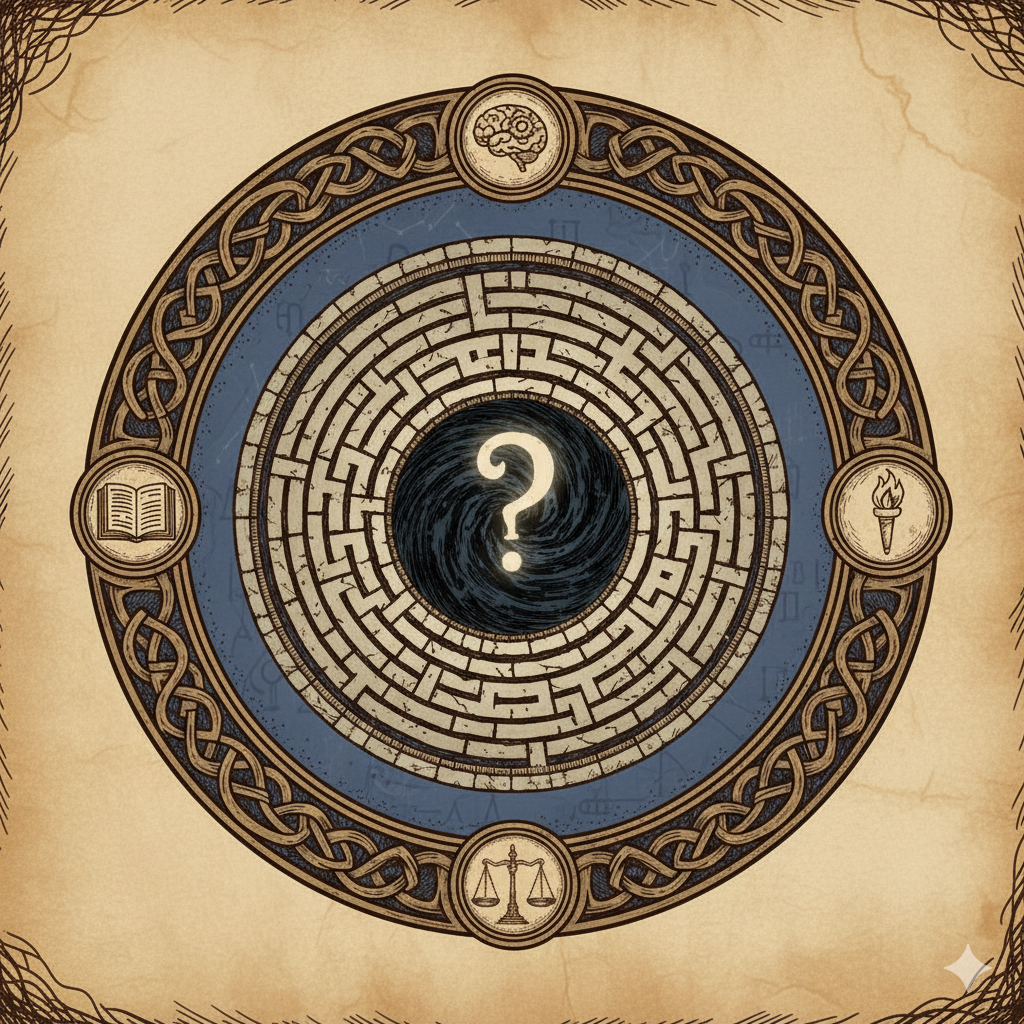
How do you balance individual experience with experience of the whole? Which story is more important?
Read. Learn. Remember.
Content Advisory: My studies bring me in contact with records that reveal the range of the human condition from its most depraved to its most noble and sublime. The contents of my writing are unsuitable for audiences younger than 18 years old and may contain triggers for those who have experienced or witnessed personal trauma.
Who Am I?
People have grappled with the question of who they are since the beginning of time. The dilemma of this question does not seem to discriminate by gender, language, or origin. I’ve broken my answer into the following sections.
Role and Affiliation
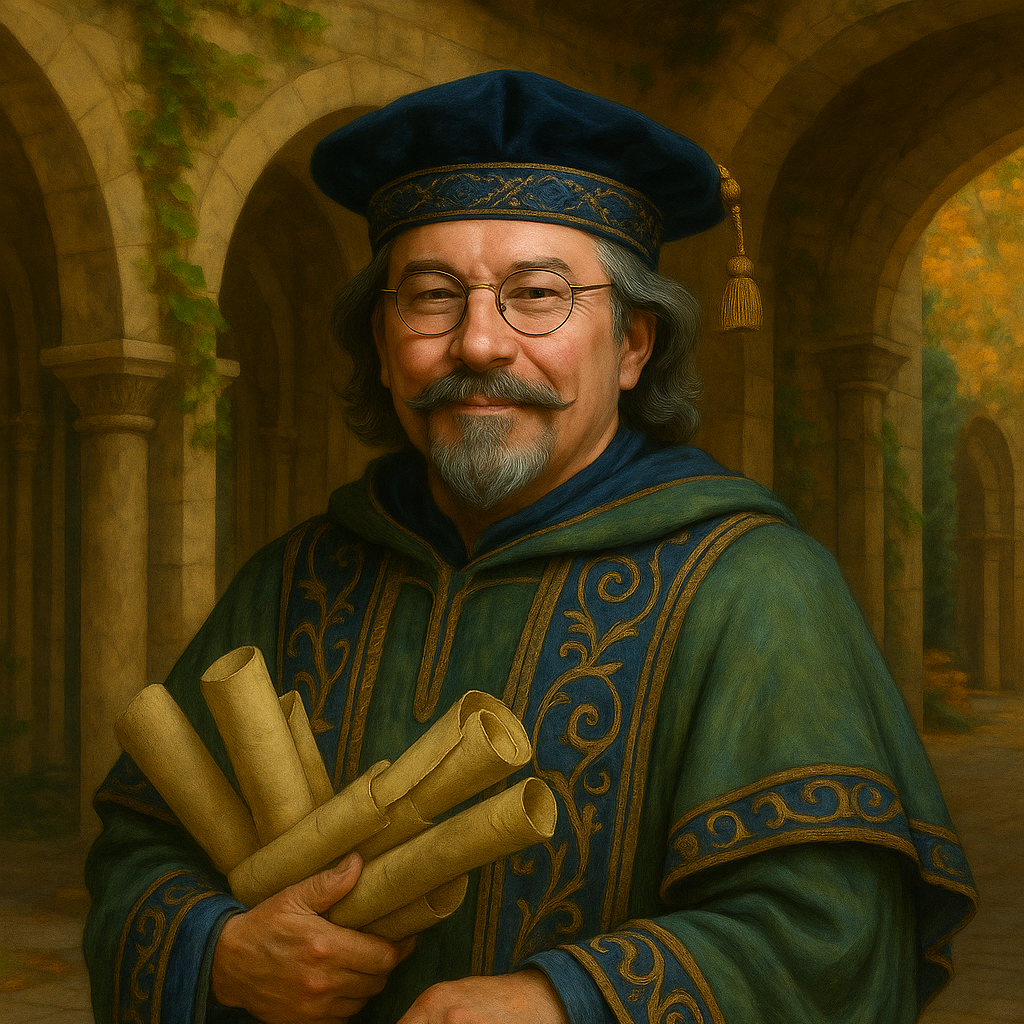
I am a tenured professor of history at the Royal University of Maadigan, the most prestigious institution of learning in the Seven Kingdoms. My appointment reflects a career devoted to the study, preservation, and interpretation of historical record, particularly where loss, disruption, and incomplete archives complicate certainty.
Focus
My work began with the reconstruction of pre-cataclysmic Cendomvitan history, not as an exercise in nostalgia, but as a necessary foundation for the future. Societies that cannot account for their origins are condemned to repeat their failures without understanding their causes. Restoring what was lost before the cataclysm has allowed patterns of governance, migration, and collapse to re-emerge, offering context to choices still unfolding.
That work changed irrevocably with the confirmation of Orudara’s continued existence. Its connection to Cendomvita re-framed our understanding of isolation, continuity, and historical consequence. Events once treated as singular or inevitable revealed themselves as part of a broader, recurring cycle, one whose implications extend beyond any single continent.
More recently, my perspective has widened further. I have been granted a rare opportunity to observe history beyond the limits of my own culture, to compare Cendomvita’s arc against those of other worlds. This vantage has not produced certainty, but it has clarified responsibility. The past does not merely explain where we have been. It shapes what futures remain possible.
Philosophy
History fails in two predictable ways. It becomes abstract when it ignores the lived experience of individuals, and it becomes incoherent when it mistakes individual experience for the whole. My work exists between these failures.
When recording history, I weigh the gravity of a single life against the momentum of events that reshape societies. To dismiss the individual is to produce a narrative that is efficient but false. To privilege only individual experience, each absolute to the one who lived it, is to lose sight of how collective action, fear, and ambition accumulate into forces no single person can redirect.
I do not seek to resolve this tension. I treat it as essential. History is most honest when it preserves the friction between personal consequence and societal movement, when it records not only what changed, but who bore the cost of that change. My responsibility is not to simplify the past into comfort or clarity, but to render it legible without erasing its weight.
Personal Origins
I was raised in poverty, the youngest of ten children, by parents whose lives were defined by labor rather than letters. My father lived a transient life, and permanence was rare in our household. Education was not assumed; it was pursued.
From an early age, I showed an unusual aptitude for reading and for recognizing patterns, gifts that separated me from others as much as they advanced me. Social isolation turned my attention inward and, eventually, toward scholarship. What began as refuge became vocation.
Through sustained effort, I earned recognition among my peers and access to the institutions and resources required to continue my work. I do not view this path as exceptional. I view it as instructive. The histories most often lost are those belonging to people without stability, without visibility, and without advocates. I learned this long before I began writing about them.
Accomplishments
My scholarship has focused on the recovery and preservation of primary sources long believed destroyed. Through sustained archival work, I have reconstructed fragmented records and authenticated original manuscripts attributed to Messo, Herte, Hile, Phine, and others whose accounts form the backbone of pre- and post-cataclysmic Cendomvitan history.
These recoveries reshaped prevailing historical narratives. Events once treated as isolated crises were revealed as connected movements, shaped by recurring patterns of ambition, migration, and institutional failure. Most consequentially, this work confirmed enduring links between Cendomvita and Orudara, transforming speculation into historical certainty and expanding the framework through which our future is now debated.
I do not claim authorship of these histories. I claim responsibility for their survival. My work assembles what remains without concealing what is missing, preserving contradiction where resolution would be dishonest. In doing so, I have sought not to simplify the past, but to make it available to those who must live with its consequences.
Invitation
The distance between my origins and my current work is neither simple nor easily explained. What matters is obligation. I carry the voices of those who cannot advocate for themselves, from unrecorded laborers to forgotten civilizations. These accounts are preserved within The Thalevirian Records, where they may be read, examined, and questioned. I invite you to read with care, to attend to what survives, and to decide for yourself what deserves to endure.