
Flight Does Not End the Threat
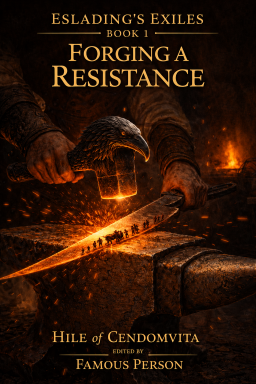
The Enemy is the Hammer, and The Kingdoms, The Anvil
When does survival require surrendering what you once refused to lose?What do we build when returning home is no longer possible?
Resistance is not declared. It is shaped.
Reader Advisory
This story contains scenes of intense violence against men, women, and children. Its contents and themes are intended for mature audiences (18+). Reader discretion is advised.Witness the Strike. Monitor the recovery of the first record.
Forging a Resistance Page Map
Teaser
Eslading has fallen, but exile offers no refuge from consequence. Hile, Phine, Ashira, Maribel, Grimm, and hundreds of others carry more than memories westward. They carry responsibilities that survived the destruction of their homes and obligations that grow heavier with every new arrival.
The threats before them are clear enough. Raven assaults must be repelled. Allies must be secured. The kingdoms must be warned. Yet the greatest challenges emerge from within. Survival demands difficult choices. Leadership requires compromise. Long-held convictions collide with realities no one wishes to accept.
As whispers of a hidden mission begin circulating through the camp, the exiles discover that preserving a people and preserving their principles are not always the same task. Every success carries a cost. Every failure narrows the future.
Forging a Resistance follows those who must build something stronger than refuge from the ruins of what was lost. Some emerge hardened. Others emerge changed. None emerge untouched.
Character Types
The Architects and The Adversaries (Primary)
These are the primary actors recovered from the Eslading diaspora. Their choices during the initial westward retreat dictated the survival of the resistance and the eventual warning of the kingdoms.
Supporting Figures (Secondary)
These characters play important supporting roles. They may serve as allies, foils, mentors, or obstacles to the primary characters. While they do not dominate the story, their presence is frequent, and they often experience meaningful development or contribute significantly to subplots.
Notable Mentions (Characters mentioned)
These are characters who appear briefly or are referenced in dialogue, letters, memories, or historical accounts. They help to populate the world, provide context, or influence the story indirectly. While they may not take part in major scenes, their named existence provides richness to the scenes in which they are mentioned.
Characters
Primary
- Ashira | After the events of this story (spoiler alert)
- Aylman | After the events of this story (spoiler alert)
- Elgyon | After the events of this story (spoiler alert)
- Grimm | After the events of this story (spoiler alert)
- Hile | After the events of this story (spoiler alert)
- Maribel | After the events of this story (spoiler alert)
- Phine | After the events of this story (spoiler alert)
- Saffron | After the events of this story (spoiler alert)
Secondary
- Betala
- Bomal
- Breo
- Captain Holt
- Cara
- Chamaliak
- Domis
- Elaren
- Gahiddiin
- Hamirazhin
- Josiah
- Kepha
- Kruld
- Lahimes
- Mellue
- Mojath
- Nedra
- Queen Sophia
- Rameh-Zhan
- Ramoz
- Rhomaeth
- Rizen
- Sealum
- Shiba
- The Shadow
Mentioned
Not every consequence arrives at once. Continue your journey through The Vidoran Crisis in Book 2: The Shadow of Silent Losses.